

Limerick City and County Council has refused Inland Fisheries Ireland’s (IFI) application to remove Annacotty weir, following a planning process that attracted numerous objections. Salmon, lampreys and eels continue to face a major barrier to upstream migration near the mouth of a river protected as part of the Lower River Shannon Special Area of Conservation (SAC).
The refusal is the latest chapter in a story stretching back to the Office of Public Works’ (OPW) replacement of the old mill weir in the late 1990s. Since then, the lower Mulkear has seen another weir installed, a European-funded conservation project, confident claims about improved lamprey passage, a complaint to the European Commission, and a removal campaign supported by more than 10,000 people. This history explains how the latest project came to fail.
I have spent more than a decade researching and campaigning on this problem. My photographs, videos and persistent campaigning pushed Annacotty weir up the agenda for fish-passage action. I wanted this barrier to become a positive example of community-led river restoration in Ireland. Instead, it has become a case study of how weaknesses in assessment, project management, and public engagement can leave a serious ecological problem unresolved for decades.
Local residents who objected to the project will be an easy target for blame. However, they had every right to question the proposal. IFI was responsible for engaging with them and preparing an application capable of addressing reasonable concerns. The Council’s refusal identified substantive weaknesses in that application. Responsibility for the quality of the application and ultimate planning failure lies with IFI.
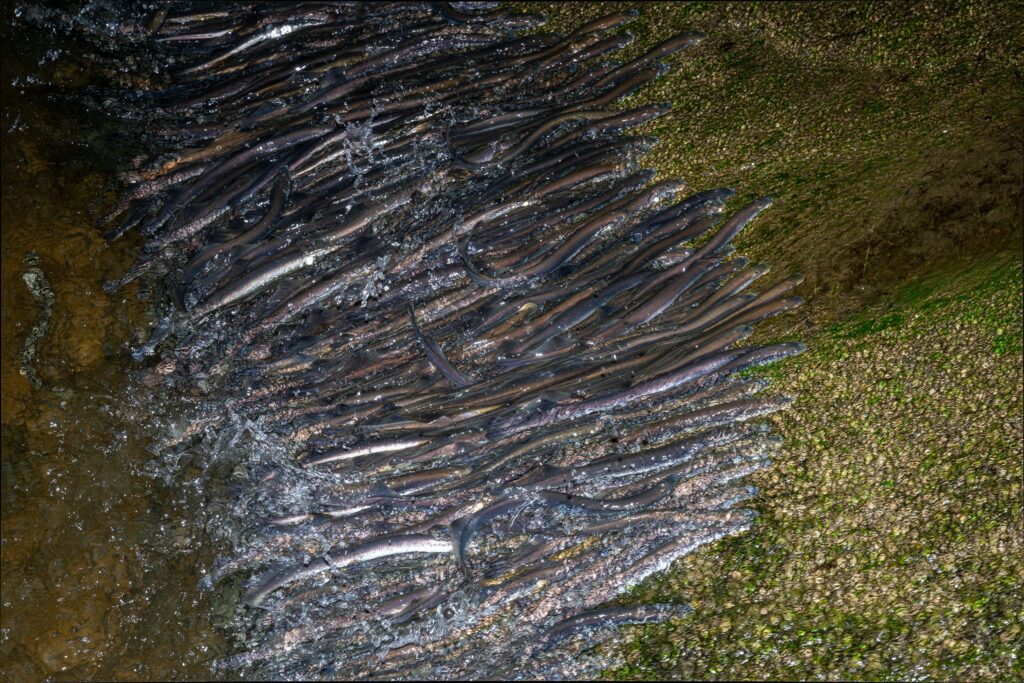
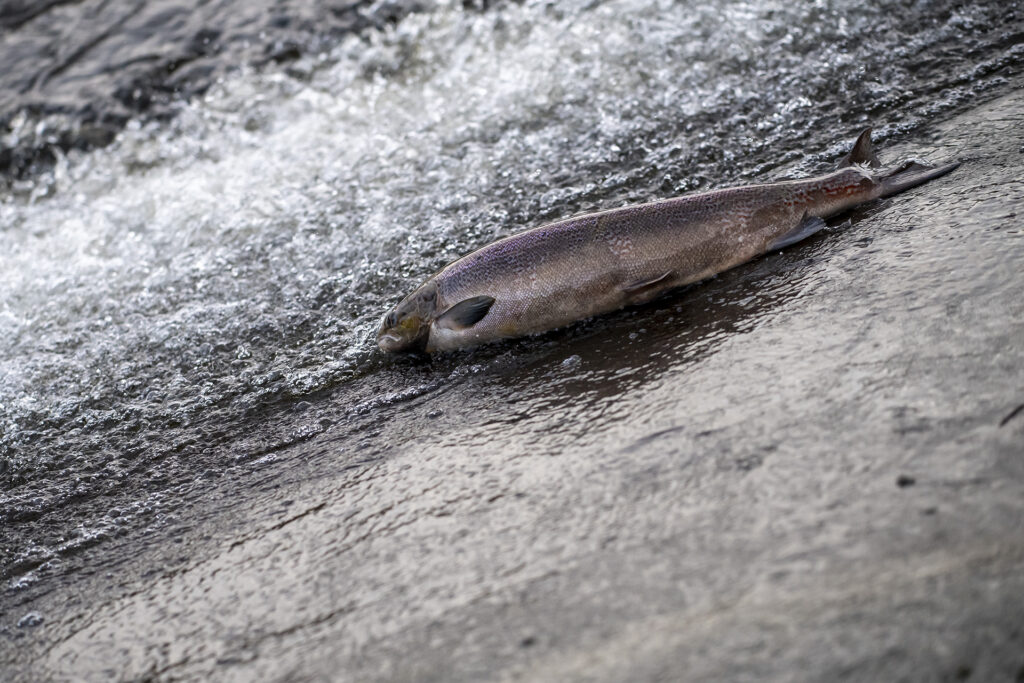
The species most seriously affected by Annacotty weir are River Lamprey and Sea Lamprey, both qualifying interests of the SAC. Annacotty weir also delays Atlantic Salmon: under some medium flows, fish have great difficulty negotiating the weir, and those delayed make repeated attempts and expend valuable energy before spawning. The weir also restricts the upstream migration of the critically endangered European Eel. The fact that some fish eventually pass does not mean passage is adequate, particularly where several barriers act cumulatively.
The original Annacotty mill weir is thought to date from around 1749. It lies approximately 2.25 km upstream along the Mulkear from the River Shannon, with Ballyclough, another historic mill weir, a further 1.4 km upstream. However, the present Annacotty weir is a modern structure constructed by the OPW in 1997-98 during the Ballymackeogh-Mulkear drainage works. It replaced the deteriorating old mill weir. The replacement was not included in the Environmental Impact Statement prepared for the flood scheme and apparently does not have planning permission. A deteriorating historic structure was replaced by a substantial modern barrier without an assessment of its consequences for the river’s migratory fish. A Denil fish pass was incorporated, but its design was inadequate and affected by turbulence. Incredibly, some of the baffle boards were never installed.
A further weir was then constructed upstream of Annacotty beneath the Mulkear crossing of the N7 Limerick Southern Ring Road (Phase 1), which opened in May 2004. In an astonishing admission, IFI’s own reports state that “an agreement was reached with the contractors” to install a three-channel Crump weir and fish counter. The account has been repeated several times and appears again in IFI’s latest fish-counter report for 2025. IFI has not identified any corresponding environmental assessment or statutory authorisation for this structure. No separate planning permission has been located in the records reviewed.
The fisheries authorities had arranged another permanent structure to be constructed in a river already obstructed downstream – in an agreement whose terms and authorisation have not been made available. Counting salmon does not remove the need to protect other species. A small side pass was provided, but its presence does not demonstrate effective passage for lampreys or eels.
The implications are considerable. A new weir across a protected river was apparently added to road construction works through an agreement with the contractors. On the available record, the structure appears to have been installed without a documented environmental impact assessment or identifiable planning consent. A contractor agreement establishes neither environmental acceptability nor statutory authorisation. More than twenty years later, the public record still needs to explain what was authorised and assessed, and the basis on which this agreement was made.
Mulkear LIFE was a €1.74 million EU-funded conservation programme that ran from 2009 to 2014, coordinated by IFI (and their predecessors). Improving fish passage on the River Mulkear was one of its central objectives. Plastic lamprey tiles were installed at Annacotty and Ballyclough weirs in 2011. On 31 August that year, the Irish Examiner reported the project manager’s declaration: “We have proven that this fish pass works”.
Claims about the success of these lamprey tiles were widely promoted through media events, conferences, and videos. Interpretative signs at the weir stated that lamprey passage had exceeded 93%. IFI began recommending the tiles for use on other rivers and won an award for this work from the Chartered Institution of Water and Environmental Management (CIWEM).
But IFI has never produced verifiable evidence demonstrating that the tiles worked at Annacotty weir. I have never witnessed a successful ascent using them, despite spending hundreds of hours at the site documenting the difficulties faced by lampreys. The final Mulkear LIFE technical report containing the project’s passage claims is no longer available from either the project website or the European Commission website. The published peer-reviewed studies by Rooney et al. (2015) and Bracken et al. (2018) provided no evidence of lamprey passage through the tiles.
The Rooney et al. (2015) telemetry paper reported that none of the 20 tagged lampreys released below Annacotty weir in 2011, after the tiles were installed, was recorded ascending it. The single Annacotty ascent recorded in 2010 preceded the tiles. Three fish ascended Ballyclough weir in 2011, but they had been carried above Annacotty before release. The paper therefore provided no evidence of passage through the tiles at Annacotty weir. The authors expressly acknowledged that the expected increase in passage at Annacotty weir was not observed. This was despite contemporaneous claims of success in media reports and at the CIWEM awards.
The later Bracken et al. (2018) eDNA study found no significant difference in concentrations at the sampled locations before and after one of the lamprey-tile passes was reinstated. Nevertheless, the paper stated that the addition of a lamprey-specific pass, “although assisting in ascent”, had no significant effect on upstream eDNA concentrations. Nothing in the results demonstrated that the tiles had assisted ascent. The possibility that they provided no benefit was not properly examined.
A substantial part of Ballyclough weir was removed by Mulkear LIFE in August 2013. No Appropriate Assessment was completed for this project, and no planning application was made. A March 2013 screening document described partial removal combined with a 60-metre rock ramp. The works were not completed as described in that document.
That works of this scale were again progressed outside the planning system within the SAC is highly problematic. Partial removal has provided long-term benefits, but that did not make the short-term damage I documented acceptable.
I brought these matters to the European Commission in February 2015. Its proposed closure arrived in June 2016, repeating IFI’s unsupported assertion that the tiles provided passage for more than 90% of Sea Lamprey. The Commission said it had no scientific information showing that the passes were ineffective.
However, the basis of my complaint was that IFI had not produced scientific evidence to support its claim. The Commission treated the absence of proof of failure as a reason to accept it. IFI repeatedly promoted the tiles as a success through the media, websites, interpretative signs and conferences, so the onus was on IFI to substantiate those claims with scientific evidence. I had observed the tiles in operation and reported my findings to the Commission, explaining why their steep slope, flow velocities and the behaviour of lampreys made the claimed passage performance implausible. Those observations and technical concerns required an evidence-based response.
I also challenged disturbance from capturing lampreys at their spawning grounds for the telemetry study. The Commission’s response emphasised the researcher’s qualifications and licences, without explaining why that timing and location were necessary.
I raised the issue of sediment impacts on downstream spawning grounds at Annacotty as a result of the partial removal of Ballyclough weir. The Commission dismissed this and said that there was no spawning recorded by IFI immediately downstream of Ballyclough weir. However, almost all of the river and sea lampreys in the River Mulkear spawn only 1.4 km downstream of the construction area. This was clearly within the zone of impact of the works. I asked for the water quality monitoring results that IFI claimed to have. None were supplied in the responses. IFI disputed my account of the works and silt release, but the Commission did not explain how it reconciled those disputes with my photographs and evidence.
I also asked for the recorded justification for treating the works as conservation management, and the formal approval for Ballyclough. The Commission cited National Parks and Wildlife (NPWS) funding, support, and steering-group membership. Those were not the records I had requested. I had already reported that NPWS had confirmed to me that it held no record of Ministerial approval for the partial removal of Ballyclough weir.
On 22 September 2016, the Commission closed my complaint, declaring the project’s objectives were achieved and that lamprey passage was now adequate. Yet in 2021, IFI’s own barrier assessment classified Annacotty as a complete barrier to adult lamprey under the conditions assessed. By 2026, IFI was seeking permission to remove the weir.
My complaint was not handled properly. The Commission closed it without answering my central evidential challenges. Similar concerns about complaint handling have reached the European Ombudsman. The handling of a complaint is itself open to scrutiny and closing a file does not settle the scientific questions it raised.
Mulkear LIFE had a budget of €1.74 million. In May 2022, €99,481 was announced for Annacotty weir assessment and planning. These figures may also do not include ordinary IFI expenditure or any additional planning funds. Successive funding and interventions have still not delivered effective passage at Annacotty weir. IFI should now publish a full account of expenditure, decisions, and results across this history.
In March 2021, I launched the petition to remove Annacotty weir. It reached 10,000 signatures that December. I explicitly asked IFI to work with me and other committed people, and offered my ecological expertise voluntarily. This was a campaign to deliver a solution.
I proposed a local steering committee, including community representatives and myself, and a riverside park as part of a wider restoration project. Local people could have helped shape the river’s future while retaining a valued public place. But IFI did not take those proposals forward. Despite the campaign’s support and my long involvement, I was not included in any aspect of the project.
IFI did hold isolated public meetings in 2022 and 2025. But national water policy had identified Annacotty weir as a pilot for collaborative ecological design and engagement beyond normal planning consultation. That commitment raised the standard against which the process should be judged. Holding two consultation events did not answer why IFI did not involve the campaign or establish the proposed local steering group.
IFI’s planning material did not explain how Annacotty weir was selected as a national fish-passage priority or acknowledge the campaign that had pushed it into public view. The petition attracted more than 10,000 signatures, Annacotty weir was subsequently named as a national pilot, but the campaign itself was omitted from the application. Those who had built public support, including me, were sidelined. I chose Annacotty weir for my campaign because it is a fish passage barrier that happens to be located five minutes from my home and because solving it could demonstrate what effective fish-passage restoration looks like.
Residents were entitled to ask how weir removal would affect their surroundings. Exploring public access, the mill’s history and the appearance of the restored river should have been part of the design process. The failure to build that shared project helped leave people feeling that change was being imposed on them. IFI missed an opportunity to turn a popular ecological campaign into a community restoration project.
The earlier publicity about lamprey tiles then returned in a damaging way. The planner’s report records an objection invoking the Mulkear LIFE lamprey tiles as a reason why removal was unnecessary. The old success claims had become part of the argument against the new solution. IFI needed to account for those claims and explain the continued passage failure. This history had practical consequences for public trust and the application.
IFI lodged application 26/60806 in July 2026. The Council refused it on 8 September without requesting further information. Its four grounds concerned the description of the development, heritage assessment, bridge stability and river-channel processes, and flooding and temporary construction works. These were matters the application needed to resolve before it could secure permission.
The heritage package contained conflicting accounts of how much historic weir fabric survived the 1997-98 reconstruction. The Department identified that discrepancy. The assessment also needed to address the protected mill structures, their settings, construction access and the proposed temporary removal of entrance gates. Establishing what remained and designing around it was basic project preparation. A modern replacement weir beside historic buildings required a coherent heritage baseline, not contradictory accounts.
Hydraulic modelling, geotechnical work and a flood-risk assessment had been submitted. Yet important questions about local scour, bridge blockage and the temporary piped causeway remained unresolved. Reports had been commissioned, but the package did not adequately answer the risks identified by the Council. Neither the heritage discrepancies nor those engineering gaps demonstrate that restoration is inherently unworkable. They demonstrate that this application had not made its case.
Ecology was not a formal refusal reason; the Council’s internal referral recommended permission subject to conditions. However, this does not place the submitted ecological material beyond scrutiny. For a state agency proposing major instream works within an SAC, the assessment should have been exemplary – and it was not.
The aquatic baseline relied principally on a late-September survey at five locations. It recorded small numbers of lampreys and assessed habitat suitability, but did not include targeted surveys of lamprey migration or spawning. The application provided limited information on when and where lampreys would be most vulnerable within the proposed working area.
The measures intended to protect lampreys during construction were insufficiently defined. The Natura Impact Statement (NIS) proposed an instream working period of July to September, but qualified this as “where practicable” and stated that lamprey spawning periods would be avoided only “where feasible”. July can overlap Sea Lamprey spawning and the period when eggs and newly hatched larvae remain within the riverbed. The proposed fish rescue referred generally to electrofishing isolated working areas and inspecting excavated sediment for ammocoetes as works proceeded. It did not provide a detailed lamprey-specific rescue methodology or make a firm commitment to avoid the most sensitive period.
The treatment of accumulated sediment was also inadequate. The NIS acknowledges that approximately 800 metres of river is impounded upstream of Annacotty weir, causing increased deposition of fine sediment, and accepts that removal will mobilise this material downstream. It recognises the resulting risks of increased turbidity, habitat smothering and the clogging of gravels used by spawning lampreys and salmon. However, it does not quantify the stored sediment or adequately predict the scale, duration and depositional footprint of its release, including its effects on the principal lamprey spawning area downstream. It also does not consider whether sediment released during the earlier works at Ballyclough contributed to the accumulated material. Instead, the assessment relies on the assertion that substantial accumulation is unlikely and that any sediment pulse will be temporary.
The fine sediments upstream are also likely to provide ammocoete habitat, particularly for Brook Lamprey and possibly smaller numbers of River and Sea Lamprey. Removal of the weir and the resulting increase in flow velocities will alter or remove some of this depositional habitat. That does not mean the weir should be retained – restoring natural river processes remains the correct objective. However, the habitat change and the protection of lampreys already present within the sediment needed to be properly assessed and addressed.
The upstream Crump weir was another major omission. Although identified in the ecological reports and hydraulic model, the application did not assess passage through it under the conditions that would follow removal of Annacotty weir. The NIS also asserted that migratory fish could continue moving through “appropriately sized” pipes in the temporary causeway, without specifying their configuration or demonstrating suitable depths and velocities for lampreys. The sediment controls and maintenance of fish passage depended on the same temporary structure whose hydraulic capacity and blockage risk the Council found had not been adequately assessed.
These deficiencies do not weaken the ecological case for removing Annacotty weir. They show that an important and potentially transformative restoration project was submitted without the detailed, species-specific and ecological assessment supported by firm mitigation commitments that work of this scale in a Natura 2000 river required.
However, the Council’s decision also deserves scrutiny. Roads and Flood Risk officers recommended further information. The Conservation Officer also recommended it if the application was not invalidated over its description. The Department requested a revised underwater archaeological assessment. The planner nevertheless treated the heritage issues as making the proposal unacceptable in principle and declined to pursue further information.
I consider that this was disproportionate. The public-notice problem required a proper procedural remedy, but the technical advice identified a route to further investigation and amended proposals. The Council should have given that route greater weight. IFI’s inadequate preparation and the Council’s decision to refuse rather than seek the necessary information have left the ecological problem where it was.
The outcome is a serious failure of delivery. Residents who objected exercised a statutory right; the more than 10,000 people who backed removal were equally entitled to expect a competent project. IFI cannot transfer responsibility for the refusal to either group.
IFI should now state publicly whether it intends to appeal, submit a properly prepared new application, or abandon the project. A renewed project needs accountable leadership, a published timetable, a comprehensive environmental assessment, and a design that addresses Annacotty weir and the upstream counter together. It should give something back to the community, such as a riverside park, and give local people and campaigners a meaningful role. Effective interim passage measures are also needed immediately. I proposed such measures more than five years ago, but not one was implemented.
My original campaign petition linked Annacotty weir to the much greater challenge of the ESB dams on the main Shannon. I wanted to begin here and build the case for tackling Ardnacrusha dam and Parteen weir. If the agencies cannot deliver at this relatively small barrier, what confidence can we have that they will address the larger ones?
The national record gives reason for concern. Clondulane Weir on the River Blackwater still stands despite a ministerial direction in July 2006 requiring its removal. Fish passage at Fermoy weir located upstream from here was restored only when the weir collapsed by itself.
I hoped Annacotty weir could become a case study in successful fish-passage restoration. It has instead become another case study in Ireland’s failure to deliver it. The problem is not simply a lack of money: publicly documented funding commitments across the wider Mulkear LIFE programme and Annacotty planning already approach €2 million, before ordinary IFI expenditure and any further planning funds are counted. What is missing is accountability and competent project preparation and management.
The latest run of River Lamprey has arrived at Annacotty to meet the same concrete barrier. After years of programmes, claims, reports and public expenditure, effective passage has still not been delivered. Ten years after the European Commission declared passage adequate, the problem I challenged remains unresolved. This is unacceptable. We need an independent review of what went wrong, accountability for the decisions taken, and a new restoration project developed with the local community, backed by robust ecological and engineering assessments, secured funding and a clear timetable for delivery. It should not be this difficult to remove a redundant barrier from a protected river. The lampreys cannot wait another decade.